I’ve had an empty space on one of my walls for a while now that has been crying out for something to hang there. I think I finally found it in a two-room schoolhouse on a tiny island in Tonga.
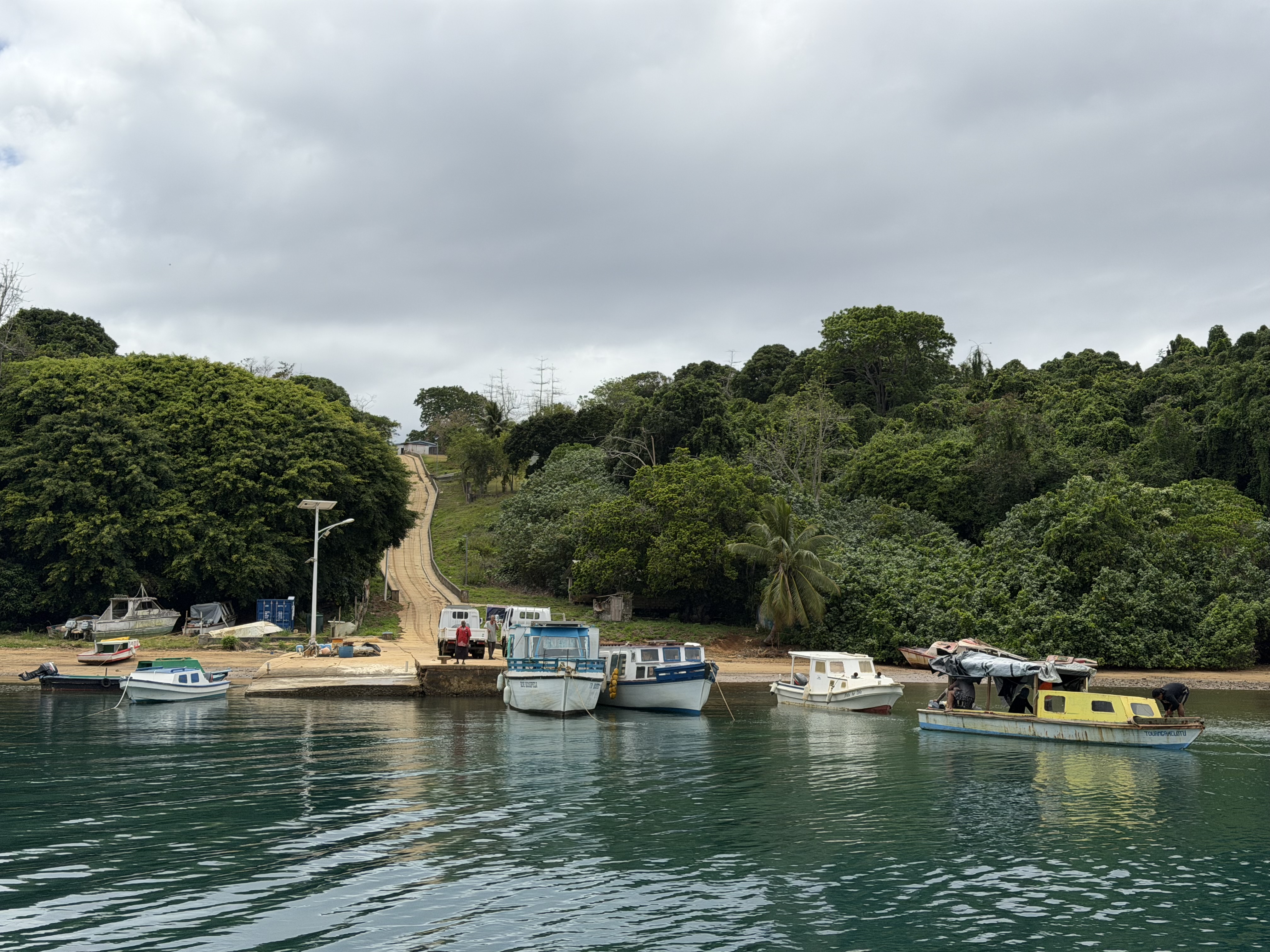
A few weeks ago, my team and I traveled to Hunga, one of the outer islands in Tonga’s Vavaʻu group, to better understand what connectivity actually looks like in one of the country’s harder-to-reach communities and, just as importantly, what people actually do with it once it arrives. On an island of roughly a hundred people, the school is one of only three places with a Starlink terminal, alongside the LDS church and the small solar facility that helps power the island. Hunga recently became one of the communities connected through Tonga’s Digital Hub effort under the ITU Smart Villages and Smart Islands initiative, which brought broadband access and digital equipment to the local primary school. The story behind the project is worth a read.
We were sitting in one of the classrooms while my colleagues talked with the school administrators. There was an empty seat near a group of students, so I pulled over a chair and sat down. I took out the digital notebook that, other than my phone, pretty much goes everywhere with me because I knew two things: I needed to jot down some notes, and there was absolutely no chance a strange electronic piece of paper was going unnoticed by a room full of kids.
So I wrote, “My name is Minh,” handed it to Sione, who I later learned was ten years old, and asked him to write his name.
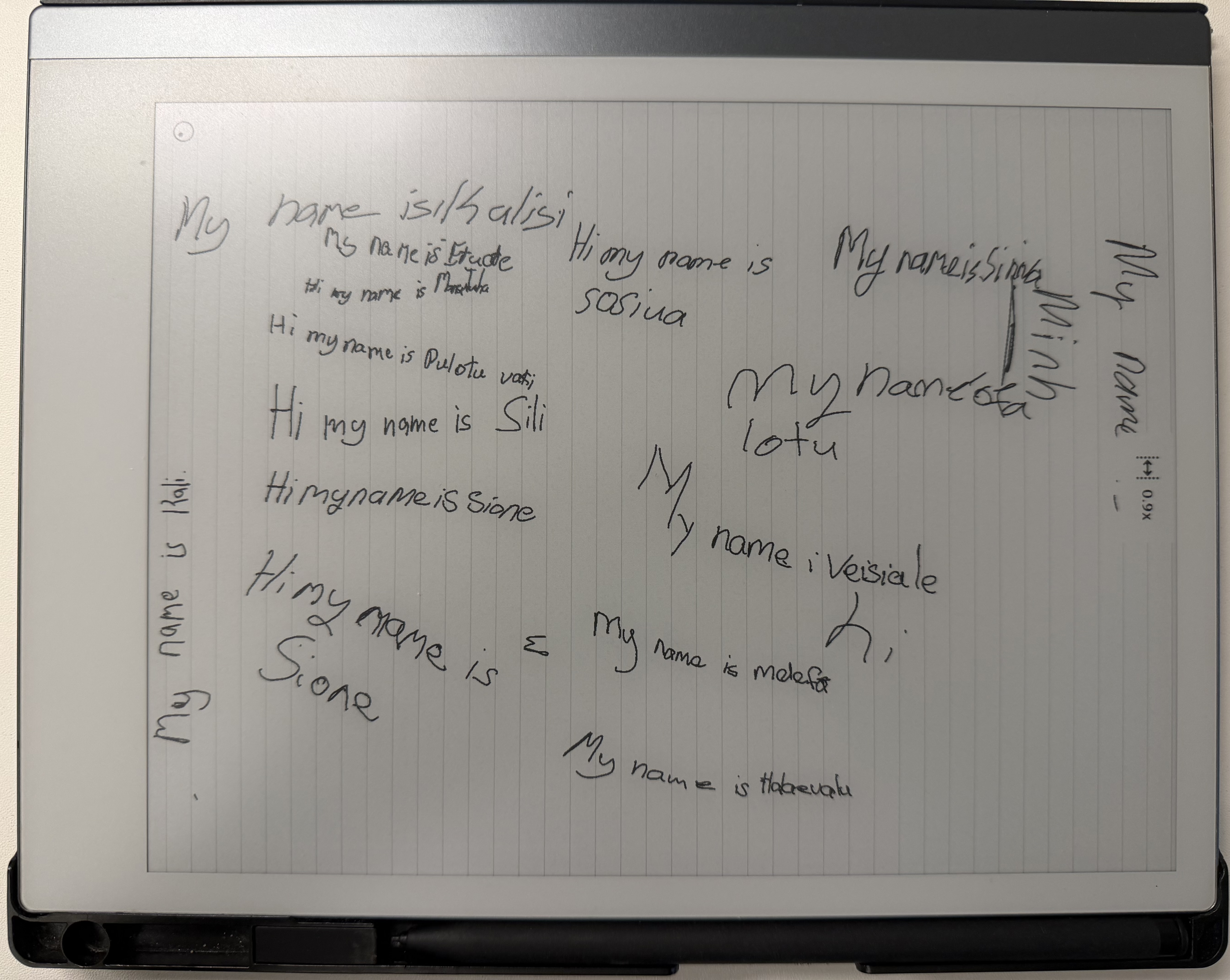
Then he handed it to the next student, who did the same, and somewhere along the way I completely lost control of my notebook. It started making its way around the classroom until nearly every kid had written something on it, testing the pen, changing the size of their handwriting, and generally treating my very serious note-taking device as the far more interesting toy that it actually is.
For many of them, it was the first time they had interacted with a notebook quite like it, something that still looked and felt a little like paper but was unmistakably digital. What I liked about the moment was how quickly the technology itself stopped being the interesting part. Within a few minutes, it was no longer my fancy electronic notebook. It was simply the thing moving around the room so everyone could write their name.
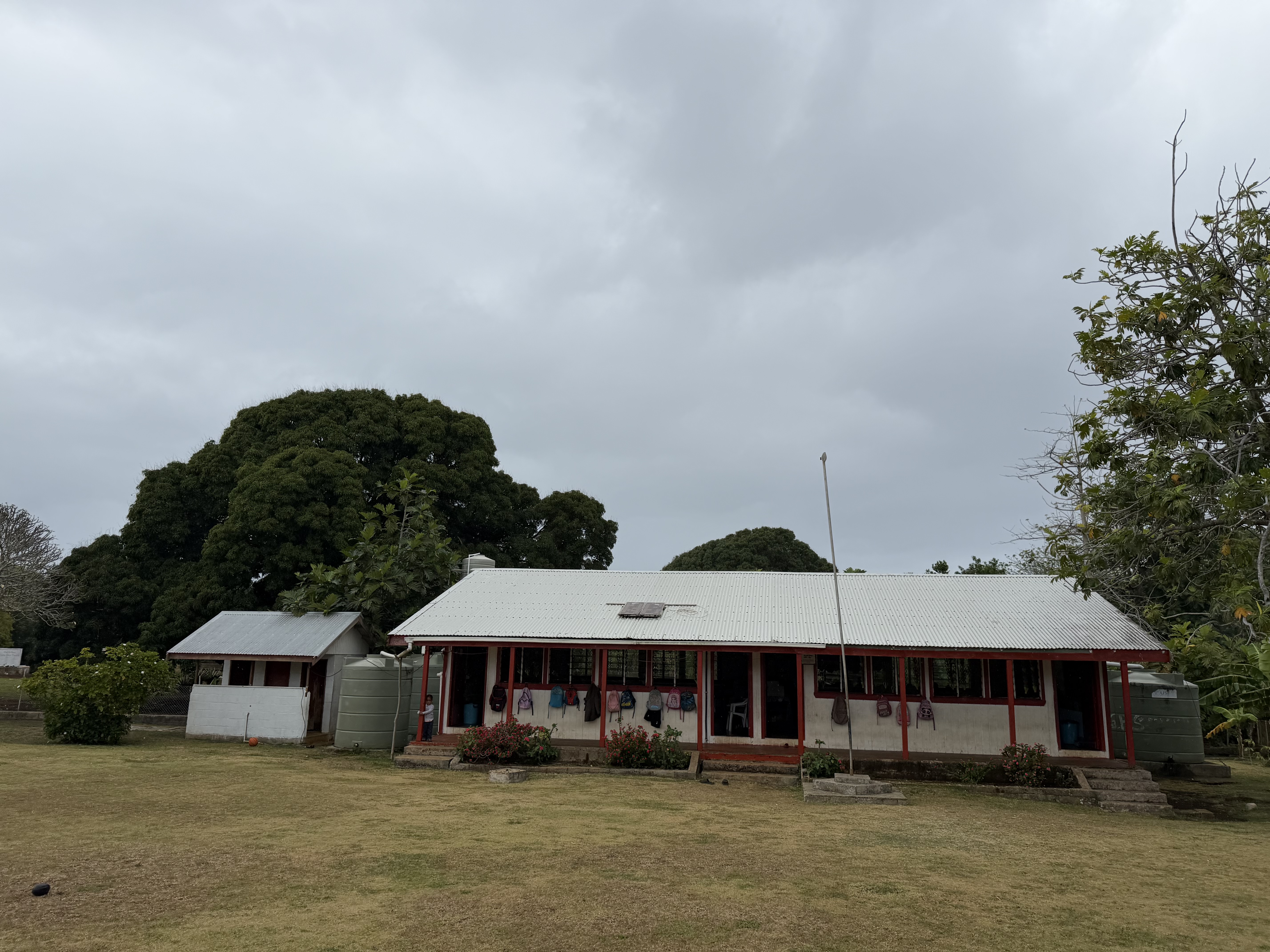
That little schoolhouse also happens to be where much of Hunga’s digital life now lives.
The contrast is hard to appreciate if you live somewhere where connectivity has become almost invisible. At home, I rarely think about whether I am connected. I wake up and check the news, answer messages, jump on Teams calls, move money between accounts, book travel, and occasionally make the deeply important decision to have someone bring dinner to my door. The network is just there, woven so completely into daily life that most of the time I only notice it when something stops working.
On Hunga, you can point to where the Wi-Fi lives because much of it is concentrated in a little primary school.
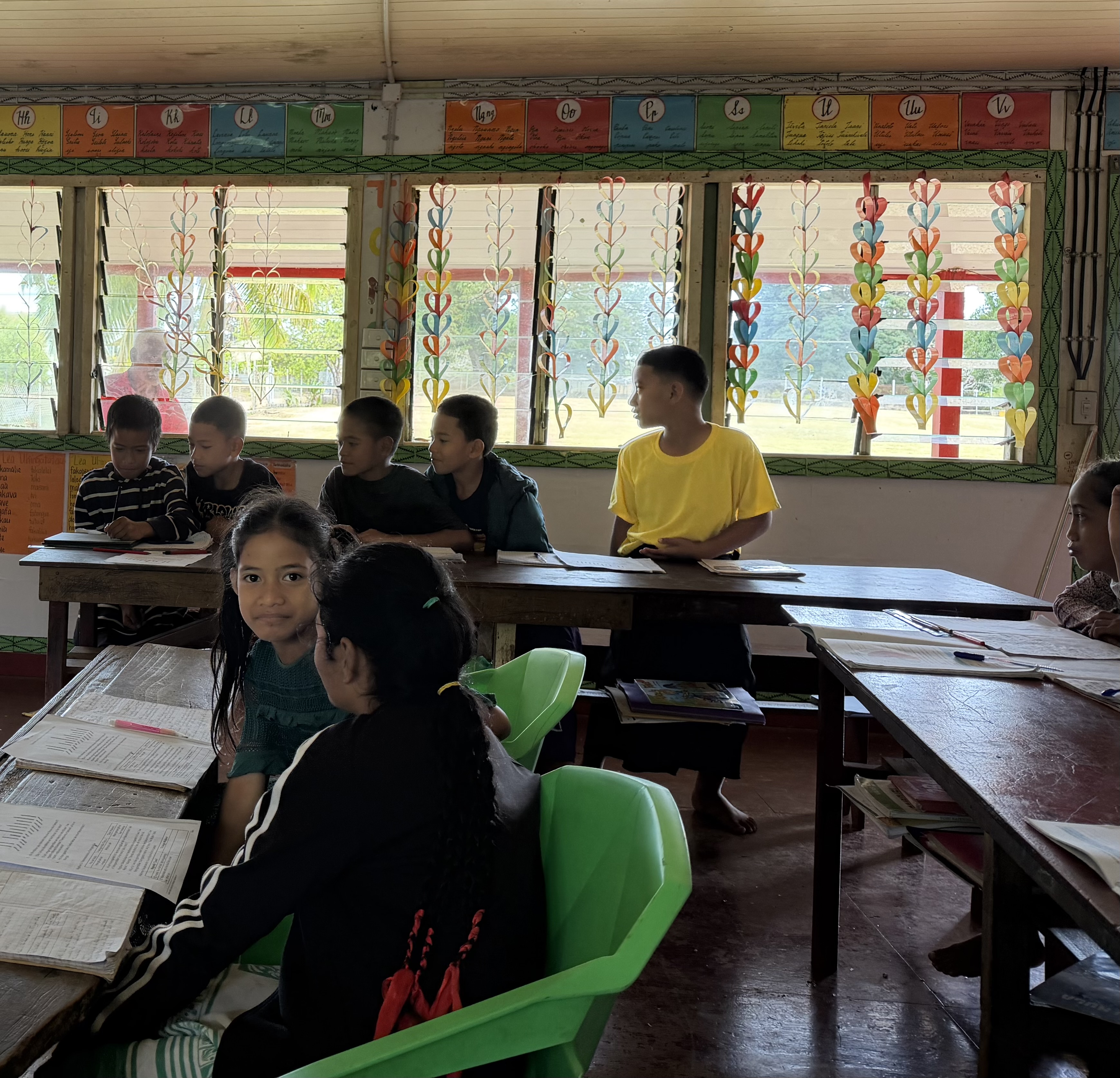
During the school day, that connection gives teachers and students access to educational resources that were previously much harder to reach. We also learned about four university students who come to the school after hours to complete remote coursework, while local entrepreneurs use the connection to communicate with customers and sell goods through Facebook Marketplace before making the boat trip to the main island.
When the school is closed, the connection still matters just as much. Members of the community know the shared Wi-Fi password, so people gather outside the school grounds with their phones close enough to catch the signal. They make calls, check the news, message family overseas, browse online, and handle all the little pieces of life that those of us with permanent broadband stopped thinking of as “digital” years ago.
Sometimes they are doing all of that from outside a gated fence and exposed to the weather.
That detail has stayed with me because it says more about the meaning of connectivity than almost any broadband statistic ever could. Only a few years ago, residents had to travel to the other side of the island just to pick up a weak and unreliable 3G signal. The connection would be too slow for video calls, online banking, or even smooth browsing, but it was the best option they had. Today, people still have to travel for reliable access, but now they come to the local school, which has become the central community hub and their most dependable gateway to the rest of the world.
There is another part of this that I keep thinking about. We often call kids like the ones I met in that classroom “digital natives” because they were born into a world where the internet already existed, but being born during the internet age is not the same thing as growing up with meaningful access to it.
A ten-year-old on Hunga belongs to the same generation as a ten-year-old in Washington, Seoul, or Singapore. Their relationship with the digital world can still be radically different because one grows up with broadband woven invisibly into almost every part of daily life, while another grows up in a place where internet access has a specific building, a password, and opening hours.
That is starting to change on Hunga, and the effects are showing up in ways that would barely register in most large-scale development statistics. Four university students doing coursework remotely, a handful of entrepreneurs selling goods online, and a classroom of children accessing digital learning resources are not numbers that are going to move a global broadband indicator or generate a billion-dollar economic impact estimate.
But small numbers still count when every number is a person.
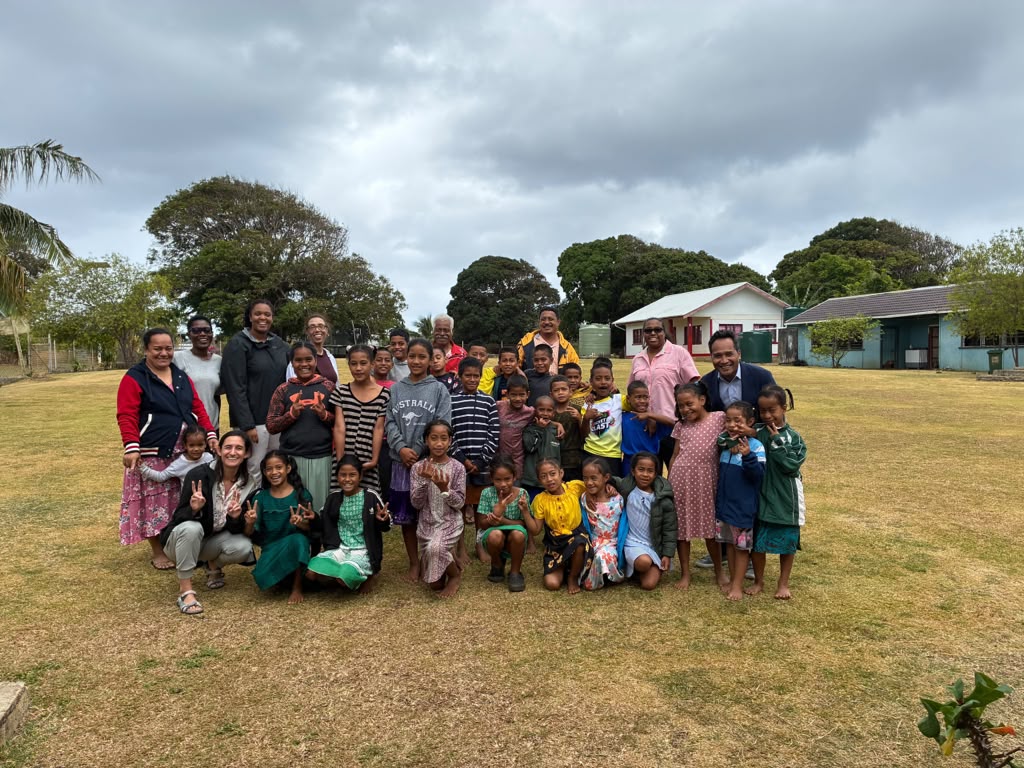
For the people on Hunga, connectivity can mean a student does not necessarily have to leave the island just to continue learning. It can mean someone selling handicrafts or produce finds a buyer before paying for a boat trip, or that a family can more easily stay connected with relatives living overseas. For the kids sitting in that two-room schoolhouse, it also means growing up with a relationship to the digital world that will look fundamentally different from the one their parents and grandparents had.
For me, it means the random page of handwriting I brought home from Tonga has somehow become one of my favorite souvenirs, and probably the thing that finally fills that empty space on my wall.
Now I just need to find a frame shop.
Roll credits.